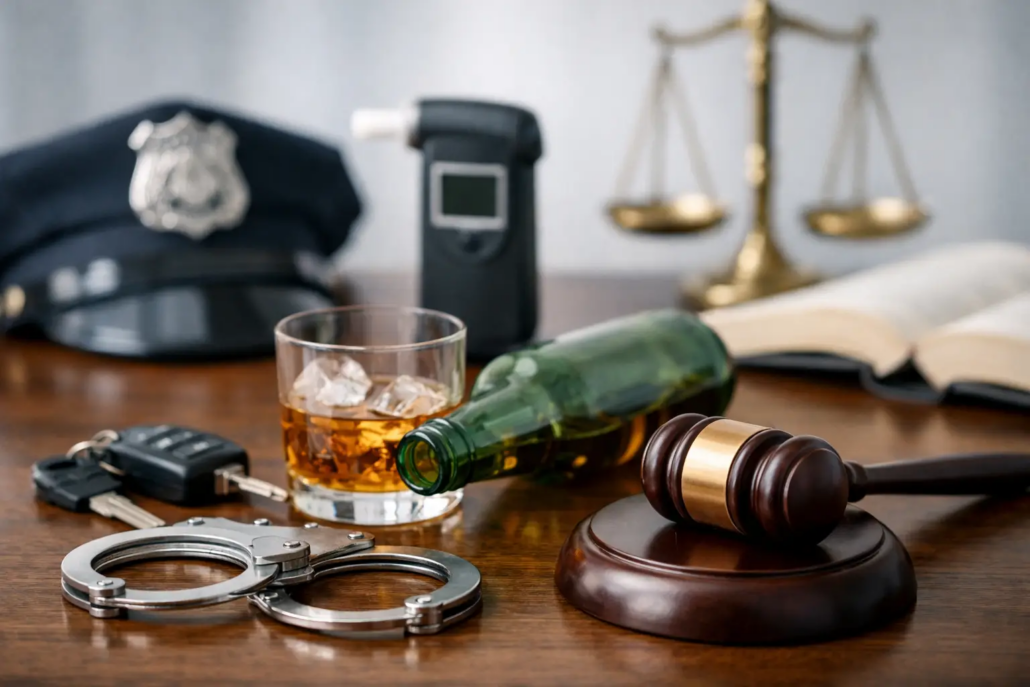
How to Fight DWI Evidence Effectively
A DWI arrest can feel like the case is already over the moment you see breath test numbers, field sobriety claims, or body camera footage in the paperwork. It is not over. If you are asking how to fight DWI evidence, the real answer is this: you do not fight the accusation in the abstract. You fight the prosecution’s proof, piece by piece, and you force the state to prove every part of its case.
That matters because DWI cases often look stronger at first glance than they really are. Police reports tend to sound clean and certain. Test results can appear scientific and final. But arrests happen fast, roadside conditions are messy, devices can malfunction, officers can overstate what they saw, and legal mistakes can weaken or even undermine the entire case.
How to fight DWI evidence starts with the stop
A DWI case often begins before any test is given. The first question is whether the police had a lawful reason to stop your car in the first place. If the stop was not supported by reasonable suspicion or probable cause, that can affect what evidence the prosecutor is allowed to use.
Maybe the officer claims you were swerving, speeding, or ignoring a traffic signal. Maybe the stop came after a checkpoint or a 911 call. Each version raises different legal issues. A vague claim like “driving suspiciously” may not be enough. If dashboard video, body camera footage, dispatch records, or civilian witness accounts do not match the officer’s report, that contradiction matters.
In New York, as anywhere else, a constitutional problem at the beginning of the case can change everything after it. That does not mean every stop is invalid. It does mean the stop should never be accepted at face value.
The officer’s observations are not automatic proof
Police often build a DWI case around a standard set of observations: bloodshot eyes, odor of alcohol, slurred speech, unsteady balance, flushed face, and admission of drinking. Jurors hear those phrases all the time. But those observations are not as objective as they sound.
Bloodshot eyes can come from fatigue, allergies, or contact lenses. Slurred speech may be exaggerated or affected by stress, accent, dental issues, or medical conditions. An odor of alcohol does not prove impairment. It may suggest drinking, but drinking and being intoxicated are not the same thing.
Even an admission like “I had two drinks” is not the end of the case. The timing, type of drink, food intake, body weight, and other facts all matter. More importantly, police often package ordinary behavior as evidence of guilt. Nervousness during a traffic stop is common. So is confusion, especially late at night on the side of a road with flashing lights in your face.
A strong defense looks closely at how those observations were recorded, whether they changed over time, and whether the video actually supports what the officer wrote.
Field sobriety tests can be challenged
Field sobriety tests are frequently presented as if they are neutral measurements. They are not. They are coordination exercises administered in roadside conditions that are often far from neutral.
The walk-and-turn and one-leg-stand tests can be affected by poor lighting, uneven pavement, weather, footwear, age, injury, weight, anxiety, or a bad back or knee. The horizontal gaze nystagmus test is more technical, but it also depends on proper training and proper administration. If the officer did not follow the protocol, the result becomes less reliable.
This is one of the biggest areas where details matter. Where exactly did the test happen? Was the shoulder narrow? Were passing cars creating distraction? Was your client told the instructions clearly? Did the officer interrupt the test or score it incorrectly? A field sobriety test does not become reliable just because it is called standardized.
Video can help or hurt
Body camera and dash camera footage can be powerful, but not always in the prosecutor’s favor. Sometimes the report says the driver was swaying, stumbling, and unable to follow directions, while the video shows a person standing normally and responding clearly. Other times the footage is incomplete, missing, or begins after important events. That gap can become part of the defense.
Video is not perfect either. Camera angles can distort what happened, and audio can be poor. But when the government’s narrative depends heavily on officer credibility, footage becomes critical.
Breath test evidence is not beyond attack
Many people think a breath test ends the argument. It does not. Breath machines must be maintained, calibrated, and used correctly. The officer or technician must follow proper procedure. The observation period before the test matters. So do mouth alcohol, vomiting, burping, certain medical conditions, and timing issues related to rising blood alcohol.
A breath result is only as trustworthy as the process behind it. Defense counsel should examine maintenance logs, calibration records, certification history, operator training, and the exact timeline of the arrest and testing. If there is a gap between driving and the test, the prosecutor still has to connect that number back to the time of operation.
That is where cases get more complicated than many defendants expect. A reading taken later at the precinct does not always prove what your blood alcohol level was when you were actually behind the wheel. Depending on the facts, that can create room to challenge the weight of the result.
Refusal cases are different, not hopeless
Some DWI cases do not involve a chemical test because the driver refused. Prosecutors often try to turn that into consciousness of guilt. But refusal evidence has its own legal issues, including whether the warning was properly given and whether the refusal was clear and unequivocal.
A confused response is not always a legal refusal. A medical issue, language barrier, or chaotic arrest scene can matter. Refusal cases also leave the state without a chemical number, which means the prosecution may lean even more heavily on officer observations that can be challenged.
Chain of custody and blood test problems
If the case involves a blood draw, the questions become even more technical. Who drew the blood? Was the draw lawful? Was the sample stored correctly? Who handled it afterward? Was the testing method reliable? Were there contamination or documentation issues?
These cases are not won by dramatic arguments. They are often won by disciplined review of records, procedures, and missing links. When the state wants to rely on science, it has to produce science that holds up under scrutiny.
How to fight DWI evidence by exposing police mistakes
A DWI prosecution is only as solid as the procedure behind it. If police failed to preserve video, wrote reports that conflict with each other, skipped required steps, or made statements that are contradicted by records, that weakens the case. Sometimes the issue is not one fatal flaw but a pattern of sloppiness that damages credibility.
That is why early case review matters. Dispatch logs, body camera footage, arrest paperwork, chemical test records, witness statements, and DMV-related documents can all tell different parts of the story. The sooner those materials are identified and demanded, the better.
This is also where prosecutorial experience matters. A lawyer who understands how the government builds DWI cases is in a stronger position to identify what is missing, what is overstated, and what the prosecution is likely to argue next.
Fighting the evidence is not the same as denying reality
Not every DWI case will be dismissed. Not every test result is defective. Sometimes the evidence is substantial, and the issue becomes reducing damage, challenging the most serious charge, protecting a license, or avoiding the long-term consequences of a conviction.
That is not surrender. It is strategy.
A smart defense is not built on one-size-fits-all advice from the internet. It depends on the stop, the officer, the video, the tests, your statements, your history, and the paper trail. In some cases, the best attack is constitutional. In others, it is scientific. In others, it is about credibility and reasonable doubt. The right approach comes from a hard review of the facts, not panic and not guesswork.
If you have been arrested, protect yourself early. Do not assume the report is accurate. Do not assume the machine is right. And do not assume the prosecutor’s version is the only version that matters. A DWI case can be challenged, but the window to do it well does not stay open forever. The sooner your evidence is examined by a defense lawyer ready to fight, the more options you are likely to have.