
Can NYC Field Sobriety Tests Establish DWI Impairment?
A driver pulled over in New York City may be asked to follow a light with their eyes, walk heel-to-toe, or stand on one leg. If the driver misses a step or sways, does that prove impairment? NYC DWI field sobriety tests can give an officer observations, but a poor performance does not automatically establish that someone was impaired or legally guilty of DWI. The details of the test and the rest of the evidence matter. For a broader overview of ways a lawyer can challenge DWI evidence, the full investigation—not just one roadside exercise—may be relevant.
Pinto Law Offices helps people understand how roadside observations fit into a DWI case. This article explains what common tests are designed to assess, what they cannot establish on their own, and how footwear, instructions, physical limitations, and testing conditions may affect their interpretation. It also explains why field tests should be considered separately from a traffic stop and any chemical test.
What NYC DWI field sobriety tests can—and cannot—show
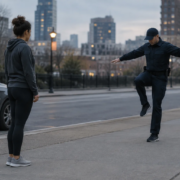
Field sobriety tests are roadside exercises an officer may use to observe a person’s coordination, balance, attention, or ability to follow instructions. Common standardized exercises include the horizontal gaze nystagmus test, the walk-and-turn test, and the one-leg stand. An officer may also use other coordination tasks. The specific exercises and the way they are administered can vary.
These tests are not direct measurements of a person’s blood alcohol concentration. A missed step, hesitation, or loss of balance may be recorded as an observation, but it does not by itself identify why the person performed that way. Nor does a roadside exercise alone decide whether the legal elements of a New York DWI offense have been proved. Its significance depends on how the evidence is presented and assessed with the rest of the case.
Observations are not the same as a conclusion
An officer may describe a person’s movements, speech, demeanor, or ability to follow directions. Those observations may be considered alongside other evidence, but they are still subject to context and scrutiny. The person’s performance may be affected by factors unrelated to alcohol, and an observer’s interpretation is not the same as a scientific measurement.
The walk-and-turn test is one part of the picture
During a walk-and-turn test, an officer generally gives instructions about taking steps along a line and turning in a specified way. Whether the person heard, understood, and followed those instructions can matter when reviewing the officer’s account. The test is one piece of evidence—not a standalone verdict.
How field sobriety test evidence may be reviewed in New York
In New York City, the prosecution may rely on different forms of evidence in a DWI case, and the relevance of each item depends on the circumstances. Field sobriety test evidence may be compared with the officer’s account of the driving, interactions, and other observations. A video, if one exists, may provide additional context about what instructions were given and how the exercises were performed.
A review may consider questions such as:
- Which exercises were requested, and what instructions did the officer give?
- Did the person appear to understand the instructions and have a fair chance to complete each task?
- What were the surface, lighting, weather, and traffic conditions at the location?
- Do a recording or other records support, differ from, or add context to the written account?
The circumstances of the stop are a separate issue from performance during roadside exercises. A case review may examine whether the NYC DWI traffic stop was lawful as well as the later investigation. In New York State, the applicable legal standards and procedures may depend on the charge and the facts; laws can change, so current advice should be based on the relevant jurisdiction.
Field sobriety exercises should also be distinguished from chemical tests. A breath test raises different questions, including the instrument’s maintenance and calibration history; records that may matter when reviewing a NYC breathalyzer result address that separate evidence issue. A roadside exercise does not report a blood alcohol concentration.
What practical factors can affect roadside test performance?
A fair assessment of a roadside test looks beyond whether the person completed every movement perfectly. Physical surroundings and the way the test was conducted can affect what an officer observes. These details do not automatically invalidate a test, but they may be relevant to interpreting the result and deciding how much weight to give it.
Factors that may warrant attention include:
- Footwear and surface: Heels, loose shoes, uneven pavement, a slope, or a slippery surface may make balance tasks harder.
- Instructions and demonstration: The wording, pace, clarity, and any demonstration may affect whether a person understood what to do.
- Physical limitations or discomfort: A prior injury, balance issue, mobility limitation, or fatigue may influence performance. The existence of a limitation does not itself determine the legal outcome.
- Testing conditions: Wind, rain, cold, poor lighting, nearby traffic, or distractions may complicate a roadside exercise.
- Timing and interaction: The sequence of events, the officer’s observations before and after testing, and any available recording can help provide context.
A person reviewing a case with counsel may find it useful to recall what footwear they wore, the surface and weather, what instructions they heard, and whether any physical limitation or discomfort was present. The details should be discussed in context rather than treated as automatic proof for or against impairment. Readers considering representation may also want to ask questions to ask about the lawyers handling an NYC DWI case, including how the legal team evaluates test instructions, conditions, and related evidence.
Frequently Asked Questions
Can I fail a field sobriety test without being impaired?
Yes. A person may have difficulty with a roadside exercise for reasons other than impairment, including footwear, surface conditions, confusing instructions, discomfort, or a physical limitation. A reported “failure” is not the same as a legal finding of guilt. In a New York City DWI case, the meaning of the performance depends on the circumstances and how it relates to other evidence.
Are field sobriety tests always recorded in NYC?
No. Whether an interaction or test was recorded can depend on the equipment, circumstances, and available footage. A recording may help show the conditions, instructions, and performance, but its absence does not by itself decide what happened or determine the outcome of a case. Evidence should be assessed based on the full record available in the particular matter.
Can an officer use observations other than test performance?
An officer may describe other observations from the stop and interaction, such as driving conduct, speech, demeanor, or responses to questions. Those observations may be considered with field test evidence and other proof, but they do not automatically settle whether DWI is established. Their significance depends on the facts, the applicable New York law, and how the evidence is evaluated.
Are roadside tests the same as a breath test?
No. Field sobriety tests involve physical or attention-based exercises, while a breath test is a chemical test used to measure alcohol in a breath sample. They raise different evidentiary questions. A roadside test does not provide a blood alcohol concentration, and neither category of evidence should be treated as a complete explanation of a case without considering its circumstances.
How Pinto Law Offices Can Help
Pinto Law Offices is committed to helping clients understand the evidence and process involved in a New York City DWI matter. A case review may consider the traffic stop, the officer’s instructions and observations, the setting and conditions of roadside tests, any available recordings, and other evidence such as chemical test results. The significance of these details depends on the individual facts and applicable New York law.
If you have questions about field sobriety test evidence, the firm is ready to evaluate your situation and explain possible next steps. Contact Pinto Law Offices to request a consultation or case evaluation.
The information in this article is for educational purposes only and does not constitute legal advice. Contact a qualified attorney authorized to practice in the jurisdiction that applies to your matter for advice specific to your situation.






