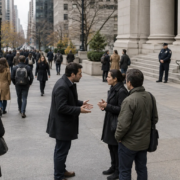
Can NYC Disorderly Conduct Lawyers Assess Protest Arrests?
A heated exchange on a busy sidewalk or a protest that blocks part of a street can draw police attention. But can a loud argument or protest lead to a disorderly conduct arrest in New York City? An NYC disorderly conduct lawyer may assess more than whether someone raised their voice: the location, the conduct alleged, and the effect on others can all matter. Pinto Law Offices helps readers understand the legal questions that may arise without assuming that an arrest means a person committed an offense.
New York’s disorderly conduct law covers several kinds of conduct, but it does not make every noisy disagreement or public demonstration a crime. This article explains the difference between protected expression and potentially chargeable conduct, what officers may observe, what can happen after an arrest, and what questions may be useful when considering legal representation.
How an NYC Disorderly Conduct Lawyer May Assess the Alleged Conduct
New York State’s disorderly conduct law, Penal Law § 240.20, addresses specified behavior in a public place when a person acts with intent to cause, or recklessly creates a risk of, public inconvenience, annoyance, or alarm. The law lists several possible forms of conduct, including unreasonable noise, tumultuous or threatening behavior, obstructing vehicular or pedestrian traffic, and certain refusals to obey a lawful order to disperse.
That means a loud argument or a protest is not automatically disorderly conduct. A disagreement may be private or brief, and a protest may involve forceful speech or chanting without meeting the elements of an offense. The details matter: what was said or done, how long it continued, whether people or traffic were actually obstructed, and whether there was a meaningful risk of public disruption.
Location and behavior can change the picture
The setting may help explain why the same behavior is viewed differently in different circumstances. A loud exchange in a crowded transit passage, for example, may raise different questions from a conversation in a less busy area. At a New York City demonstration, the location of the gathering, nearby pedestrian or vehicle movement, and whether participants were given a lawful direction may be relevant. None of those facts alone decides the issue.
Expression is not the same as conduct
The First Amendment protects many forms of speech and peaceful protest, but it does not provide blanket immunity for every action at a demonstration. Authorities may distinguish expression from conduct they allege falls within a specific part of the state law. The government still must prove the applicable legal elements. This discussion concerns New York State law; laws and procedures can vary by jurisdiction and may change after publication.
What Evidence and Police Observations May Matter in New York City
An arrest decision can reflect what an officer says they observed at a particular moment. That account is not necessarily the only evidence relevant to a charge. Depending on the circumstances, a lawyer may examine whether the description of the conduct matches the location, timing, and other available information.
Potentially relevant materials or questions can include:
- What the officer reports hearing or seeing, and the specific conduct alleged.
- Whether the event took place on a sidewalk, in a roadway, in a transit area, or somewhere else.
- Whether there was an actual obstruction, disruption, or risk to public order, rather than simply unpopular or loud speech.
- Whether video, audio, witness accounts, or other records may help clarify the sequence of events.
- Whether police gave an instruction, what it said, and whether it was lawful and applicable in the circumstances.
A recording may show only part of an encounter, and a witness may have seen only one angle. Evidence should be considered in context rather than treated as conclusive based on a short clip or a single description. In New York City, the relevant court and next steps depend on the charge and the details of the case.
A protest arrest can also raise separate questions about police conduct. A defense challenge to a criminal charge and a potential civil claim are different matters, with distinct legal standards and deadlines. Someone concerned about an encounter may find background in a guide to police misconduct claims in NYC. Whether any claim is available depends on specific facts and applicable law.
What Happens After an Arrest—and What to Consider Next
After an arrest, a person may have an initial court appearance, often called an arraignment. The court process can address the charge, release, and any conditions, but the next steps depend on the case. For a practical overview of what happens at a New York City criminal arraignment, see Pinto Law Offices’ related resource.
A disorderly conduct allegation should be understood through its specific legal basis and supporting evidence, not just the label used at the time of arrest. A lawyer may review the charging documents, the officer’s account, available recordings, witness information, and whether the conduct alleged fits the applicable provision. The appropriate approach depends on the individual circumstances; general information cannot determine how a particular case will proceed.
Choosing counsel and keeping the issues clear
During a consultation, a person may want to ask who would handle the matter, what work is included, how communication will happen, and how fees are structured. Pinto Law Offices has additional guidance on questions to ask criminal lawyers in NYC about fees. It can also be useful to ask how counsel evaluates the location, the alleged behavior, and any evidence that may bear on whether speech or conduct is being treated as criminal.
Avoid assuming that an arrest proves guilt or that a protest setting automatically defeats a charge. Each case turns on its facts and the law that applies. A qualified lawyer can explain the process and discuss options after reviewing the available information.
Frequently Asked Questions
Can police arrest someone for shouting during an argument in NYC?
An arrest may follow an argument, but shouting by itself does not automatically establish disorderly conduct under New York law. The alleged conduct, setting, and circumstances matter, including whether the behavior fits a specific part of the statute and creates the required risk of public inconvenience, annoyance, or alarm. The charge and evidence should be reviewed in context.
Can chanting at a New York City protest lead to a criminal charge?
Chanting and other expressive activity may be protected, but an event’s context can matter if authorities allege conduct such as unreasonable noise, obstruction, or another legally specified act. A protest does not automatically make conduct criminal, and it does not automatically prevent a charge. The details of the location, behavior, and any police direction may be relevant.
Does a disorderly conduct arrest mean I have a conviction?
No. An arrest is not the same as a conviction. A criminal case has a court process, and the outcome depends on the charge, evidence, and applicable law. In New York City, an arraignment may be an early stage of that process. A lawyer can explain what a particular court notice or charging document means after reviewing it.
What evidence could help explain what happened during a protest arrest?
Depending on the situation, relevant information may include video or audio, witness accounts, the location and timing of events, and records describing what police observed or instructed. A recording may not capture the entire encounter, so context matters. A lawyer can assess what information is available and whether it relates to the specific allegation.
How Pinto Law Offices Can Help
Pinto Law Offices is dedicated to helping people understand the criminal process and the issues raised by a disorderly conduct allegation in New York City. The firm is committed to fighting for clients’ rights and can evaluate how the location, alleged behavior, police observations, and available evidence may relate to the charge. No two situations are identical, and the legal options depend on the facts and applicable law.
If you have questions after an argument- or protest-related arrest, contact Pinto Law Offices to discuss your situation and request a free consultation or case evaluation.
The information in this article is for educational purposes only and does not constitute legal advice. Contact a qualified attorney authorized to practice in the jurisdiction that applies to your matter for advice specific to your situation.