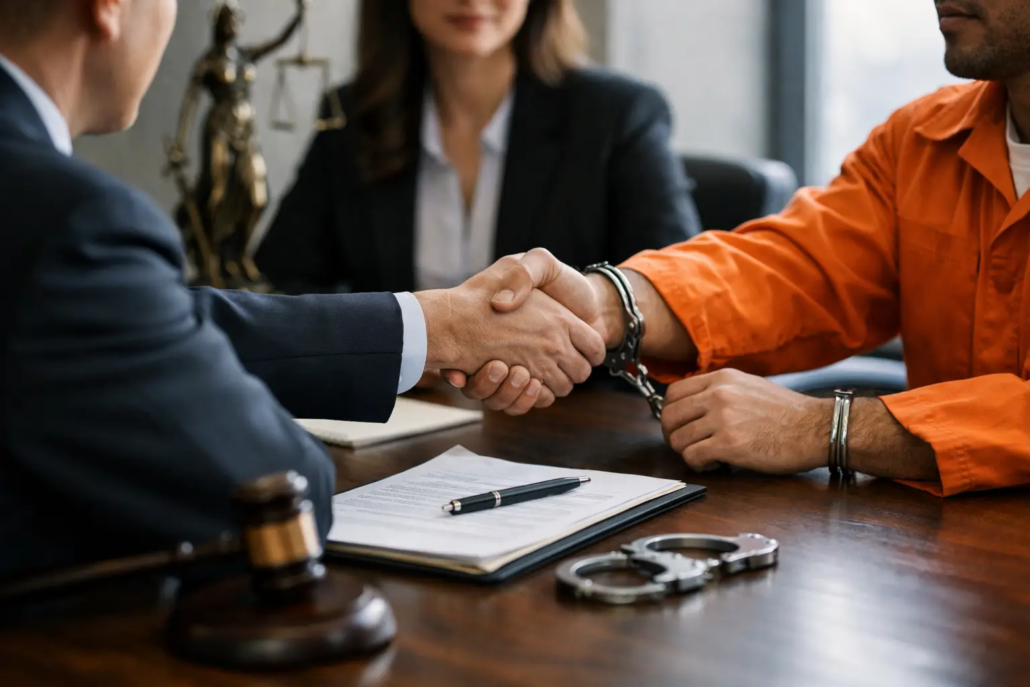
How Plea Deals Work in Criminal Cases
A prosecutor offers a deal. The judge sets another court date. You are told this is your chance to avoid trial. That is usually the moment people start asking how plea deals work – and whether saying yes will protect them or follow them for years.
A plea deal can resolve a criminal case without a trial, but it is never just a shortcut. It is a negotiation with real consequences for your record, your freedom, your job, your immigration status, and sometimes your family. If you are facing charges, the right question is not just whether a deal is available. The real question is whether the deal serves you.
How plea deals work from start to finish
At the most basic level, a plea deal is an agreement between the prosecution and the defense. The defendant agrees to plead guilty, usually to a specific charge or set of charges, and in return the prosecutor offers something. That might be a reduced charge, a lighter sentence recommendation, fewer counts, or some other favorable resolution.
In practice, the process is more strategic than people expect. Prosecutors do not hand out deals at random. They assess the strength of their evidence, the seriousness of the allegation, the complainant’s position, the defendant’s background, and how much risk they face if the case goes to trial. Defense counsel does the same analysis from the other side, looking for weaknesses, legal defenses, credibility issues, suppression problems, and leverage points.
If both sides see value in avoiding trial, negotiations begin. Sometimes that happens early, even at arraignment or soon after. In other cases, meaningful offers only appear after motions are filed, evidence is turned over, or witnesses are interviewed. A stronger defense position often creates better plea options.
Once an agreement is reached, the defendant appears in court and enters a guilty plea under oath. The judge asks questions to make sure the plea is knowing, voluntary, and supported by facts. If the judge accepts it, sentencing may happen immediately or at a later date.
What prosecutors usually offer in a plea deal
Not all plea deals look the same. One person may be offered a plea to a lesser offense. Another may still plead to the top charge but receive a promise of probation instead of jail. In some cases, the prosecution agrees to dismiss other charges. In others, the deal may involve a conditional discharge, treatment, community service, or another alternative outcome.
This is where people get into trouble by focusing on only one piece of the deal. A reduced charge can still carry harsh collateral consequences. A no-jail offer may still leave you with a criminal record that affects licensing, employment, housing, or school discipline. For non-citizens, the wrong plea can create severe immigration consequences even when the sentence seems light.
That is why the paper result and the real-life result are not always the same thing.
Why some cases get better deals than others
The biggest factor is usually proof. If the prosecutor has a weak witness, inconsistent statements, shaky identification, or illegally obtained evidence, the defense has leverage. If the case is strong on paper and the exposure at trial is serious, the prosecution may have less reason to make concessions.
The charge matters too. Violent felonies, gun offenses, repeat offenses, and cases with serious injuries often bring harder bargaining positions. Misdemeanor cases and first arrests may offer more room for negotiation, though that is never automatic.
Timing also matters. Early deals can be attractive because they reduce uncertainty, but they are not always the best deals. Sometimes waiting allows the defense to uncover facts the prosecution did not expect to become a problem. Sometimes waiting increases pressure on the prosecution. Other times, early acceptance avoids a worse outcome later. It depends on the case, the court, and the risks.
What you give up when you accept a plea
When you plead guilty, you give up major constitutional rights. You waive your right to a trial, your right to confront witnesses, your right to remain silent at trial, and your right to require the prosecution to prove guilt beyond a reasonable doubt.
That waiver matters. Once a plea is entered and accepted, undoing it is difficult. People sometimes think they can “take the deal for now” and fix it later. That is usually not how it works. Judges expect guilty pleas to be final.
You may also be giving up more than courtroom rights. Depending on the offense, a plea can affect professional licenses, firearm rights, public benefits, student status, family court matters, and immigration status. In New York City, where many people work in regulated industries or live in housing situations sensitive to criminal records, those side effects can be as damaging as the sentence itself.
How plea deals work when the first offer is bad
The first offer is not always the best offer. Sometimes it is a pressure tactic. Sometimes it reflects the prosecutor’s initial view before the defense has exposed problems in the case. Sometimes it is genuinely the best the prosecution will do.
This is where experienced defense counsel matters. A lawyer who understands how prosecutors build cases can often see where the pressure points are. That may mean challenging a stop, arrest, search, identification procedure, statement, or witness credibility. It may mean presenting mitigation in a way that gives the prosecutor a reason to move. It may mean preparing the case for trial so the other side understands the defense is not accepting a bad outcome out of fear.
Effective plea bargaining is not about asking nicely. It is about creating leverage and using it.
When taking a plea deal may make sense
There are cases where a plea deal is the right move. If the evidence is strong, trial exposure is severe, and the offer meaningfully reduces risk, accepting a deal may protect your future. That is especially true when the agreement avoids jail, reduces a felony to a misdemeanor, or resolves a case in a way that limits damage to work, school, or family.
A plea may also make sense when the emotional and financial cost of litigation is too high compared with the possible upside of trial. Trials are stressful. They are public. They are uncertain. Even people with defenses face risk when they put their case in front of a judge or jury.
But “making sense” is not the same as “easy.” A plea should only be accepted after the evidence, defenses, sentencing exposure, and collateral consequences are fully reviewed.
When fighting the case may be the better choice
Sometimes the offer is simply not good enough. If the prosecution cannot prove the case, if key evidence may be suppressed, or if the plea still causes devastating long-term harm, trial or continued litigation may be the stronger path.
That is especially true when innocent people are pressured to plead just to end the case. It happens. People panic. They want certainty. They want to go home. But a quick resolution can create years of fallout. The system rewards speed. Your defense should prioritize your interests, not the court calendar.
There is no universal rule that a plea bargain is better than trial. There is only the hard analysis of risk versus consequence.
Questions to ask before accepting any plea deal
Before saying yes, you should understand exactly what charge you are pleading to, what sentence is promised or possible, what conditions you must complete, and what happens if you violate those conditions. You should also ask about criminal record consequences, immigration issues, employment risks, and whether the plea can affect family court, school discipline, or future background checks.
Just as important, ask what the prosecution’s case looks like if you do not plead. What evidence exists? What evidence may be challenged? What motions can be filed? What is the realistic trial risk, not the worst-case fear?
A good defense lawyer does not sell you optimism or push you into panic. The job is to give you a clear-eyed assessment so you can make a smart decision under pressure.
The real point of a plea deal
Plea bargaining is not about mercy. It is about leverage, risk, and control. The prosecution wants a conviction without trial. You want the best possible outcome with the least possible damage. Those goals overlap sometimes, and when they do, a plea deal can be useful. When they do not, accepting one can be a costly mistake.
If you are charged with a crime, do not treat a plea offer like a coupon that expires. Treat it like a legal decision that can shape the next several years of your life. The right move is the one that protects your rights, your record, and your future after the courtroom is gone.