NYC Assault and Weapon Charges: New York City Defense
Facing an assault allegation is stressful, especially when police also claim that a weapon was possessed or used. For anyone dealing with NYC assault and weapon charges in New York City, NY, an important starting point is understanding that the allegations may be connected but are not necessarily the same offense. Each charge can involve different legal elements and different evidence.
A person may be accused of causing physical injury, attempting to cause injury, possessing an alleged weapon, or using an object during an encounter. The way prosecutors characterize the event can affect the charges, potential penalties, and defense strategy. Pinto Law Offices provides criminal defense guidance to people who need a clearer understanding of how these allegations may interact.
This article discusses the difference between assault and weapon offenses, how police may identify an alleged weapon, what evidence can affect both charges, and common issues that arise during a New York City criminal case. The facts of each matter are important, and general information cannot predict how prosecutors or a court will evaluate a particular case.
How NYC Assault and Weapon Charges Are Separate but Connected
An assault allegation generally focuses on conduct involving another person’s physical safety. Depending on the alleged facts and the degree charged, prosecutors may examine issues such as intent, physical injury, the seriousness of the injury, and the circumstances surrounding the encounter. A weapon allegation, by contrast, may focus on possession, control, knowledge, the type of object, or the way it was allegedly used.
Because these are different inquiries, an assault charge does not automatically prove a weapon charge. Likewise, the alleged presence of a weapon does not by itself establish every element of an assault offense. In New York City, NY, prosecutors may file multiple counts when they believe the evidence supports separate theories of criminal liability.
What may make an object a weapon?
The word “weapon” can refer to different categories under New York law. Some items are designed or commonly understood to be weapons. Other ordinary objects may be treated as dangerous instruments depending on how they were allegedly used or intended to be used. The surrounding circumstances can matter, including the object’s characteristics, the alleged conduct, and whether someone suffered an injury.
Why the distinction matters
A defense attorney may examine each count separately rather than treating the case as one undifferentiated accusation. Questions may include whether the alleged object was recovered, whether the person knew it was present, whether the object can be reliably identified, and whether the evidence supports the required intent for the assault allegation.
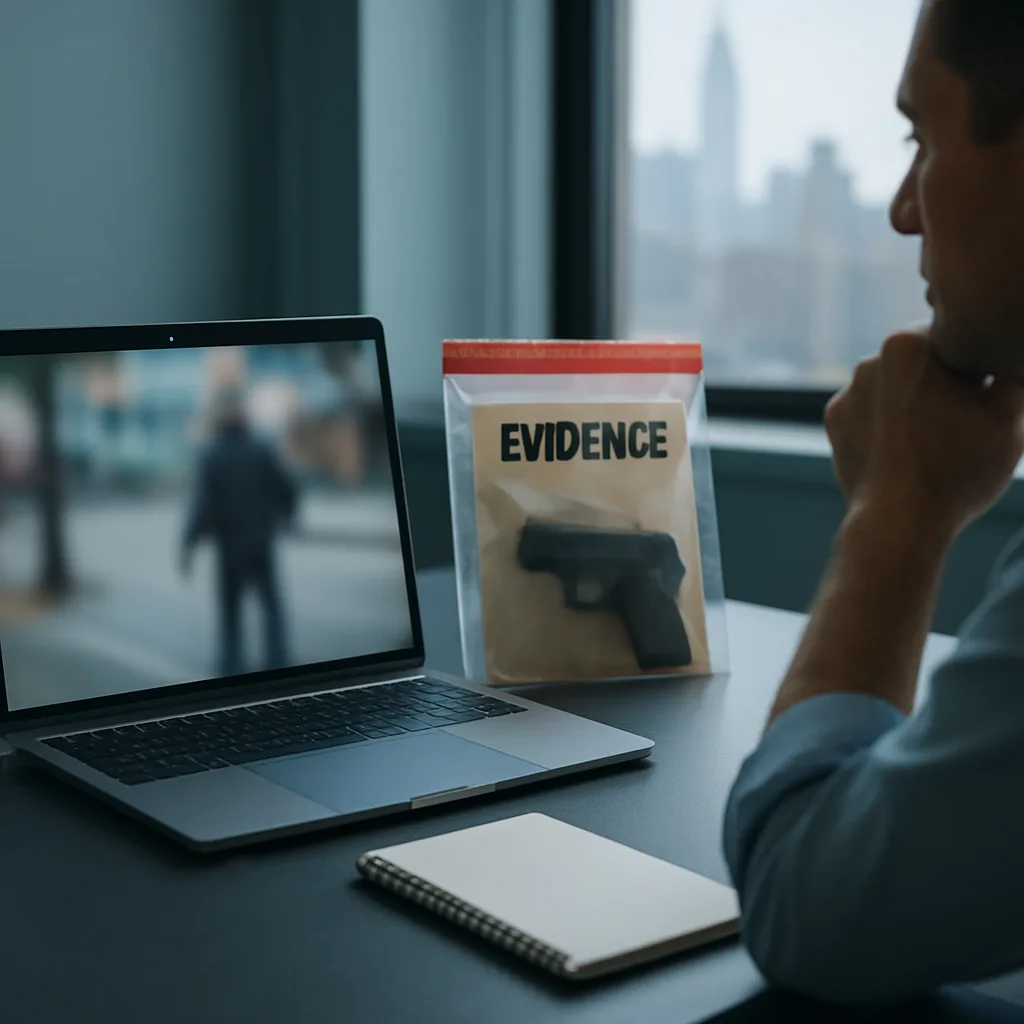
Evidence in an Assault With a Weapon Case in New York
Police and prosecutors may rely on several kinds of evidence when investigating weapon possession and assault in NYC. No single category is automatically decisive. The reliability, completeness, and lawful collection of the evidence may all become important issues.
Common evidence may include:
- Statements from the complainant, bystanders, or responding officers
- Surveillance footage from a building, business, vehicle, or public area
- Photographs of an object, scene, or claimed injuries
- Medical records or testimony concerning the nature of an injury
- A recovered object, along with evidence connecting it to a particular person
- Text messages, social media content, phone data, or 911 recordings
- Statements allegedly made before, during, or after the incident
The identification of an alleged weapon can be especially significant. A witness may describe an object from memory, while video may show only part of an encounter or an item that is difficult to distinguish. Officers may also report seeing an object, recovering one nearby, or receiving information from another person. The defense may examine whether the evidence establishes that the recovered item is the same object allegedly involved.
Physical evidence can raise additional questions. For example, fingerprints, DNA, or other forensic material may be absent, inconclusive, or consistent with innocent contact. A recovered object’s location may not establish who possessed it. Similarly, a photograph may show an item but not prove who held it, how it was used, or what a person intended.
In New York City, NY, video evidence can also present context problems. A recording may begin after the confrontation, omit audio, or fail to capture events outside the camera’s view. A careful review may compare footage with witness accounts, timestamps, dispatch information, photographs, and the sequence described in police reports.
Defense Issues, Procedure, and Common Mistakes
An assault and weapon case may move through familiar New York criminal court stages, including arraignment, conferences, motion practice, negotiations, and possibly hearings or trial. The exact path depends on the charges, the evidence, the person’s history, and other case-specific facts. Felony allegations may involve additional proceedings and greater potential sentencing exposure than misdemeanor allegations.
The interaction between charges can create several defense complications:
- Different proof requirements. The prosecution may need to prove injury or intent for an assault count, while a weapon count may require proof of knowing possession, control, or use of a qualifying object.
- Conflicting accounts. A witness may describe an assault but provide limited or inconsistent information about the alleged weapon. Those differences can affect how the evidence is evaluated.
- Possession disputes. An item found in a shared area, vehicle, or location near multiple people may raise questions about who knew about it and exercised control over it.
- Statements and searches. The circumstances of questioning, consent, a stop, a search, or a seizure may affect whether evidence can be challenged under New York and federal constitutional protections.
- Sentencing consequences. Multiple convictions can create greater exposure than one conviction, although the actual consequences depend on the specific offenses, prior record, facts, and sentencing rules in effect.
People often make the situation harder by discussing the incident publicly, deleting messages, contacting an alleged complainant, or trying to explain events to investigators without understanding the legal consequences. Depending on the circumstances, an attorney may advise a person about communications, evidence preservation, court appearances, and available defenses. Prompt legal review can help identify issues before evidence is lost or assumptions become fixed.
Frequently Asked Questions
Can an assault charge be filed without a weapon charge in New York City?
Yes. An assault case may proceed without a weapon allegation when prosecutors claim that physical injury or attempted injury occurred but do not have sufficient evidence of a qualifying weapon, knowing possession, or weapon use. Conversely, a weapon possession charge may be filed without an assault charge. The specific allegations depend on the facts and evidence presented to prosecutors in the New York City case.
Does finding a weapon near a person prove possession?
Not necessarily. Proximity alone may not establish knowing possession or control. The circumstances may include where the item was found, who had access to that location, whether other people were present, and whether statements or physical evidence connect the item to a particular person. A New York defense attorney can evaluate whether the available proof supports the possession theory alleged.
What if surveillance video does not clearly show the alleged weapon?
Unclear footage does not automatically resolve the case for either side. Prosecutors may rely on testimony or other evidence, while the defense may examine the video’s angle, quality, timing, continuity, and whether it actually supports the description in the complaint. The significance of the recording depends on the complete evidentiary record and how the court treats any related challenges.
Can one incident lead to both state and federal weapon charges?
It is possible for different authorities to investigate conduct under different laws, but most routine New York City assault and weapon prosecutions are handled under New York State law in state court. Federal jurisdiction depends on separate requirements and circumstances. Because overlapping authority is fact-specific, a person should discuss any federal contact or notice with a qualified attorney promptly.
How Pinto Law Offices Can Help
Pinto Law Offices is dedicated to helping people understand the charges they face and the evidence supporting them. The firm is committed to fighting for clients’ rights while examining the assault allegation, the alleged weapon, possession theory, witness accounts, video, physical evidence, and the procedures used to obtain information.
Every case requires an individualized review. The attorneys at Pinto Law Offices are ready to evaluate your situation, explain potential legal issues, and discuss available options in the New York City, NY area. Contact Pinto Law Offices to request a free consultation or case evaluation.
The information in this article is for educational purposes only and does not constitute legal advice. Contact a qualified attorney licensed in New York City, NY for advice specific to your situation.